Buy 1911.eu ?
We are moving the project
1911.eu .
Are you interested in purchasing the domain
1911.eu ?
domain@kv-gmbh.de · 0541-91531010
Buy 1911.eu ?
What is stoichiometry?
Stoichiometry is a branch of chemistry that deals with the quantitative relationships between the reactants and products in chemical reactions. It involves calculating the amount of reactants needed to produce a certain amount of product, or determining the amount of product that can be obtained from a given amount of reactants. Stoichiometry is based on the principle of the conservation of mass, which states that matter is neither created nor destroyed in a chemical reaction. It is an essential tool for understanding and predicting the outcomes of chemical reactions. **
How does stoichiometry work?
Stoichiometry is a branch of chemistry that deals with the quantitative relationships between reactants and products in chemical reactions. It involves using balanced chemical equations to determine the amount of reactants needed or products produced in a reaction. By following the stoichiometric calculations, one can predict the amount of product that will be formed from a given amount of reactant, or vice versa. Stoichiometry is essential for understanding and predicting the outcomes of chemical reactions in a precise and quantitative manner. **


Similar search terms for Stoichiometry
Top-Angebote
Products related to Stoichiometry:
-
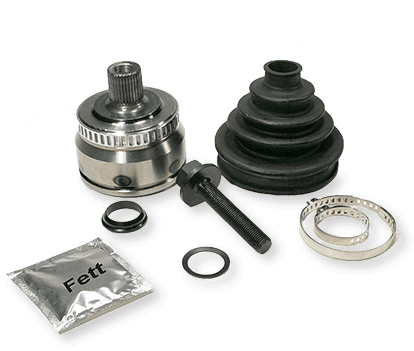
FEBEST 1911-E53LH CV jointFitting Position: Front Axle Left, transmission sided; External Toothing differential side: 27; Internal Gearing Differential Side (transmission connection): 26; Seal Ring Diameter [mm]: 44; Outer Diameter [mm]: 86; Quantity: 1; Packaging width [cm]: 12,5; Packaging height [cm]: 12,5; Production date to: 200609; Left-/right-hand drive vehicles: for left-hand drive vehicles52,49 £*Shipping: 8,45 £Secure redirect to the provider
-
FEBEST 1911-X3 CV jointFitting Position: transmission sided, Front Axle Left; External Toothing differential side: 27; Internal Gearing Differential Side (transmission connection): 24; Seal Ring Diameter [mm]: 44; Outer Diameter [mm]: 81, 82; Quantity: 1; Packaging width [cm]: 10,5; Packaging height [cm]: 10,5; Production date to: 201203, 201612, 200607, 201708; Production date from: 201210, 201101; Left-/right-hand drive vehicles: for left-hand drive vehicles71,99 £*Shipping: 8,45 £Secure redirect to the provider
-
VAICO V40-1911 Wheel bearing kitfor OE number: 44 08 669; Supplementary Article / Supplementary Info Info 2: without ABS sensor ring; Fitting Position: Front Axle; Weight [kg]: 1,091; Packaging width [cm]: 9,6; Packaging height [cm]: 9,8; Packaging Depth [cm]: 9,8; Supplementary Info: EXPERT KITS +; Braking/Driving Dynamics: for vehicles without ABS; Vehicle Identification Number (VIN) to: 3V613233, 3Y000000; Construction Year to: 10/200214,49 £*Shipping: 8,45 £Secure redirect to the provider
-
FEBEST 1911-F48RH CV joint kitFitting Position: transmission sided, Front Axle Right; External Toothing differential side: 26; Internal Gearing Differential Side (transmission connection): 33; Seal Ring Diameter [mm]: 31; Outer Diameter [mm]: 77; Production date to: 202002, 201907, 201801, 202003, 201906, 201802, 201905, 202006, 201912, 202103, 202102; Left-/right-hand drive vehicles: for left-hand drive vehicles; Production date from: 201907, 201710, 201406205,99 £*Shipping: 1,99 £Secure redirect to the provider



-
What is reaction equation stoichiometry?
Reaction equation stoichiometry is the quantitative relationship between the amounts of reactants and products in a chemical reaction. It involves balancing the chemical equation to ensure that the number of atoms of each element is the same on both sides of the equation. This allows us to determine the exact amounts of reactants needed and products formed in a reaction. Stoichiometry calculations are essential for predicting the outcome of chemical reactions and determining the efficiency of a reaction. **
-
What is stoichiometry in chemistry?
Stoichiometry in chemistry is the study of the quantitative relationships between the amounts of reactants and products in chemical reactions. It involves using the balanced chemical equation to determine the amount of one substance that is needed to react with another substance, or the amount of product that will be formed from a given amount of reactant. Stoichiometry is important for understanding and predicting the outcomes of chemical reactions, as well as for determining the efficiency of chemical processes. It is a fundamental concept in chemistry and is used in various applications, such as in industry and research. **
-
Who is heavier in stoichiometry?
In stoichiometry, the concept of "heavier" typically refers to the molar mass of a substance. Molar mass is the mass of one mole of a substance and is expressed in grams per mole. Therefore, the substance with the higher molar mass is considered "heavier" in stoichiometry. This is important when calculating the amount of reactants needed to produce a certain amount of product, as the molar mass is used to convert between mass and moles. **
-
What is task 5 in stoichiometry?
Task 5 in stoichiometry involves calculating the limiting reactant in a chemical reaction. This step is crucial in determining the maximum amount of product that can be formed. By comparing the amount of product that can be produced from each reactant, we can identify which reactant will be completely consumed first, limiting the amount of product that can be formed. This information is essential for accurately predicting the outcome of a chemical reaction. **

What is task 4 in stoichiometry?
Task 4 in stoichiometry involves calculating the amount of excess reactant remaining after a reaction has occurred. This step is important to determine if any reactant is left over and to calculate the maximum amount of product that can be formed. By comparing the amount of excess reactant to the stoichiometric ratio, one can determine the limiting reactant and the theoretical yield of the reaction. This information is crucial for understanding the efficiency of a chemical reaction and for planning future experiments. **
What is the second stoichiometry problem?
The second stoichiometry problem involves determining the amount of a product that can be formed from a given amount of reactant. This problem typically requires using the balanced chemical equation to calculate the mole ratio between the reactant and product, and then using this ratio to convert the given amount of reactant to the amount of product. It is important to pay attention to units and conversions when solving this type of stoichiometry problem. **
Top-Angebote
Products related to Stoichiometry:
-
Inspire Select Shell Ejecting Toy Pistol ABS Plastic Continuous Shooting Revolver For Outdoor Games, Role Play & Birthday Gifts m92 blueBring more excitement to outdoor play with satisfying shellejecting action and an engaging mechanical design. This shell ejecting toy pistol is made from ABS plastic and requires no batteries, making it easy to enjoy whenever playtime begins. Its...143,95 $*Shipping: 0,00 $Secure redirect to the provider
-
"""Ammunition Cabernet Sauvignon 2022 Red Wine - California""""""Dark garnet velvet in color and texture, this Cabernet from Paso Robles highlights what the region is quickly being known for, those delicious Bordeaux grapes. Featuring rich dark fruits with notes of black cherry, blueberry, and spice, this..."20,97 $*Shipping: 0,00 $Secure redirect to the provider
-
FEBEST 1911-E53LH CV jointFitting Position: Front Axle Left, transmission sided; External Toothing differential side: 27; Internal Gearing Differential Side (transmission connection): 26; Seal Ring Diameter [mm]: 44; Outer Diameter [mm]: 86; Quantity: 1; Packaging width [cm]: 12,5; Packaging height [cm]: 12,5; Production date to: 200609; Left-/right-hand drive vehicles: for left-hand drive vehicles52,49 £*Shipping: 8,45 £Secure redirect to the provider
-
FEBEST 1911-X3 CV jointFitting Position: transmission sided, Front Axle Left; External Toothing differential side: 27; Internal Gearing Differential Side (transmission connection): 24; Seal Ring Diameter [mm]: 44; Outer Diameter [mm]: 81, 82; Quantity: 1; Packaging width [cm]: 10,5; Packaging height [cm]: 10,5; Production date to: 201203, 201612, 200607, 201708; Production date from: 201210, 201101; Left-/right-hand drive vehicles: for left-hand drive vehicles71,99 £*Shipping: 8,45 £Secure redirect to the provider
-
What is stoichiometry?
Stoichiometry is a branch of chemistry that deals with the quantitative relationships between the reactants and products in chemical reactions. It involves calculating the amount of reactants needed to produce a certain amount of product, or determining the amount of product that can be obtained from a given amount of reactants. Stoichiometry is based on the principle of the conservation of mass, which states that matter is neither created nor destroyed in a chemical reaction. It is an essential tool for understanding and predicting the outcomes of chemical reactions. **
-
How does stoichiometry work?
Stoichiometry is a branch of chemistry that deals with the quantitative relationships between reactants and products in chemical reactions. It involves using balanced chemical equations to determine the amount of reactants needed or products produced in a reaction. By following the stoichiometric calculations, one can predict the amount of product that will be formed from a given amount of reactant, or vice versa. Stoichiometry is essential for understanding and predicting the outcomes of chemical reactions in a precise and quantitative manner. **
-
What is reaction equation stoichiometry?
Reaction equation stoichiometry is the quantitative relationship between the amounts of reactants and products in a chemical reaction. It involves balancing the chemical equation to ensure that the number of atoms of each element is the same on both sides of the equation. This allows us to determine the exact amounts of reactants needed and products formed in a reaction. Stoichiometry calculations are essential for predicting the outcome of chemical reactions and determining the efficiency of a reaction. **
-
What is stoichiometry in chemistry?
Stoichiometry in chemistry is the study of the quantitative relationships between the amounts of reactants and products in chemical reactions. It involves using the balanced chemical equation to determine the amount of one substance that is needed to react with another substance, or the amount of product that will be formed from a given amount of reactant. Stoichiometry is important for understanding and predicting the outcomes of chemical reactions, as well as for determining the efficiency of chemical processes. It is a fundamental concept in chemistry and is used in various applications, such as in industry and research. **
Similar search terms for Stoichiometry
-
VAICO V40-1911 Wheel bearing kitfor OE number: 44 08 669; Supplementary Article / Supplementary Info Info 2: without ABS sensor ring; Fitting Position: Front Axle; Weight [kg]: 1,091; Packaging width [cm]: 9,6; Packaging height [cm]: 9,8; Packaging Depth [cm]: 9,8; Supplementary Info: EXPERT KITS +; Braking/Driving Dynamics: for vehicles without ABS; Vehicle Identification Number (VIN) to: 3V613233, 3Y000000; Construction Year to: 10/200214,49 £*Shipping: 8,45 £Secure redirect to the provider
-
FEBEST 1911-F48RH CV joint kitFitting Position: transmission sided, Front Axle Right; External Toothing differential side: 26; Internal Gearing Differential Side (transmission connection): 33; Seal Ring Diameter [mm]: 31; Outer Diameter [mm]: 77; Production date to: 202002, 201907, 201801, 202003, 201906, 201802, 201905, 202006, 201912, 202103, 202102; Left-/right-hand drive vehicles: for left-hand drive vehicles; Production date from: 201907, 201710, 201406205,99 £*Shipping: 1,99 £Secure redirect to the provider
-
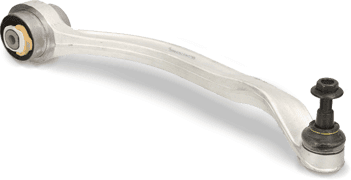
MEYLE 116 050 1911 Suspension armFitting Position: Front Axle Right, Front Axle Left, Lower; Control/Trailing Arm Type: Control Arm; Supplementary Article / Supplementary Info Info 2: without ball joint; Material: Sheet Steel; replacement in pairs recommended: ; Required quantity: 2; Supplementary Info: ORIGINAL Quality29,49 £*Shipping: 8,45 £Secure redirect to the provider
-
AISIN BPNI-1911 Brake pad setWear Warning Contact: excl. wear warning contact; Vibration: without vibration absorber; Width [mm]: 130; Thickness: 17; Quantity Unit: Axle Set; Brake System: AKEBONO; Fitting Position: Front Axle; Construction Year to: 04/1990, 05/1986, 05/1990, 01/1987, 05/1988, 02/1990, 05/1994, 08/1994, 02/1987; Construction Year from: 09/1985, 07/1986, 04/1987, 12/1986, 01/1985; Vehicle type: 200SX, Silvia, Prairie, Pick Up (King Cab), Vanette E, Hardbody18,99 £*Shipping: 8,45 £Secure redirect to the provider
-
Who is heavier in stoichiometry?
In stoichiometry, the concept of "heavier" typically refers to the molar mass of a substance. Molar mass is the mass of one mole of a substance and is expressed in grams per mole. Therefore, the substance with the higher molar mass is considered "heavier" in stoichiometry. This is important when calculating the amount of reactants needed to produce a certain amount of product, as the molar mass is used to convert between mass and moles. **
-
What is task 5 in stoichiometry?
Task 5 in stoichiometry involves calculating the limiting reactant in a chemical reaction. This step is crucial in determining the maximum amount of product that can be formed. By comparing the amount of product that can be produced from each reactant, we can identify which reactant will be completely consumed first, limiting the amount of product that can be formed. This information is essential for accurately predicting the outcome of a chemical reaction. **
-
What is task 4 in stoichiometry?
Task 4 in stoichiometry involves calculating the amount of excess reactant remaining after a reaction has occurred. This step is important to determine if any reactant is left over and to calculate the maximum amount of product that can be formed. By comparing the amount of excess reactant to the stoichiometric ratio, one can determine the limiting reactant and the theoretical yield of the reaction. This information is crucial for understanding the efficiency of a chemical reaction and for planning future experiments. **
-
What is the second stoichiometry problem?
The second stoichiometry problem involves determining the amount of a product that can be formed from a given amount of reactant. This problem typically requires using the balanced chemical equation to calculate the mole ratio between the reactant and product, and then using this ratio to convert the given amount of reactant to the amount of product. It is important to pay attention to units and conversions when solving this type of stoichiometry problem. **
* All prices are inclusive of VAT and, if applicable, plus shipping costs. The offer information is based on the details provided by the respective shop and is updated through automated processes. Real-time updates do not occur, so deviations can occur in individual cases. ** Note: Parts of this content were created by AI.